


hydrodemolition, also known as water jet concrete removal, is a highly efficient hydroblasting method for removing damaged or deteriorated concrete using ultra-high-pressure (UHP) water jets. unlike conventional demolition methods such as jackhammers, hydrodemolition removes concrete selectively and precisely without causing vibrations or structural damage to the remaining substrate.
the process is widely used in the rehabilitation and maintenance of bridges, parking garages, tunnels, dams, and other reinforced concrete structures where preserving the integrity of the base structure is critical. hydrodemolition also exposes reinforcement bars cleanly without damaging them, making it the superior alternative to mechanical concrete demolition.
monissa betonista valmistetuissa rakennuksissa on jo muutaman vuoden kuluttua vakavia vaurioita. näin on erityisesti rakennuksissa, jotka ovat alttiina voimakkaalle rasitukselle ja/tai ympäristövaikutuksille, kuten maanalaiset pysäköintihallit, sillat, urheilustadionit ja padot. kun betoni on murenemassa, se voi vaarantaa rakennuksen turvallisuutta merkittävästi. näiden rakennusten pelastaminen edellyttää korjauksia.
mutta jotta betonia voidaan kunnostaa, on mureneva materiaali poistettava virheettömästä. tähän työhön vesipiikkaus (tunnetaan myös nimellä hydrodemolition tai hydroblasting) on oikea menetelmä. periaatteessa poisto olisi mahdollista myös painevasaralla, mutta siinä on suuria haittoja. painevasarat aiheuttavat rakennuksessa tärinää, jolloin voi syntyä vakavia jälkivaurioita. lisäksi vesipiikkaukseen verrattuna on lähes mahdotonta paljastaa betonin sisällä olevat rautatangot siististi ja vaurioitta. kun raudoitus on ensin paljastettu vasaralla, ne on toisessa vaiheessa hiekkapuhallettava ruosteen poistamiseksi. tämä aikaa vievä ja kallis työvaihe ei ole tarpeen vesipiikkauksessa, koska betonin poisto ja ruosteen poisto voidaan tehdä yhdessä työvaiheessa ilman muita lisävälineitä. viimeisenä mutta ei vähäisimpänä vasarat aiheuttavat paljon enemmän melua ja kiusaa erityisesti paikallisia asukkaita.
falch tarjoaa erittäin korkeapaineisia vesilaitteita ja lisävarusteita vesipiikkaukseen eri malleissa ja teholuokissa. löydät patentoidun ja erityisesti betoninpoistoon kehitetyn hyjet-suuttimen sekä laajan valikoiman erilaisia robotteja vesipiikkaukseen.


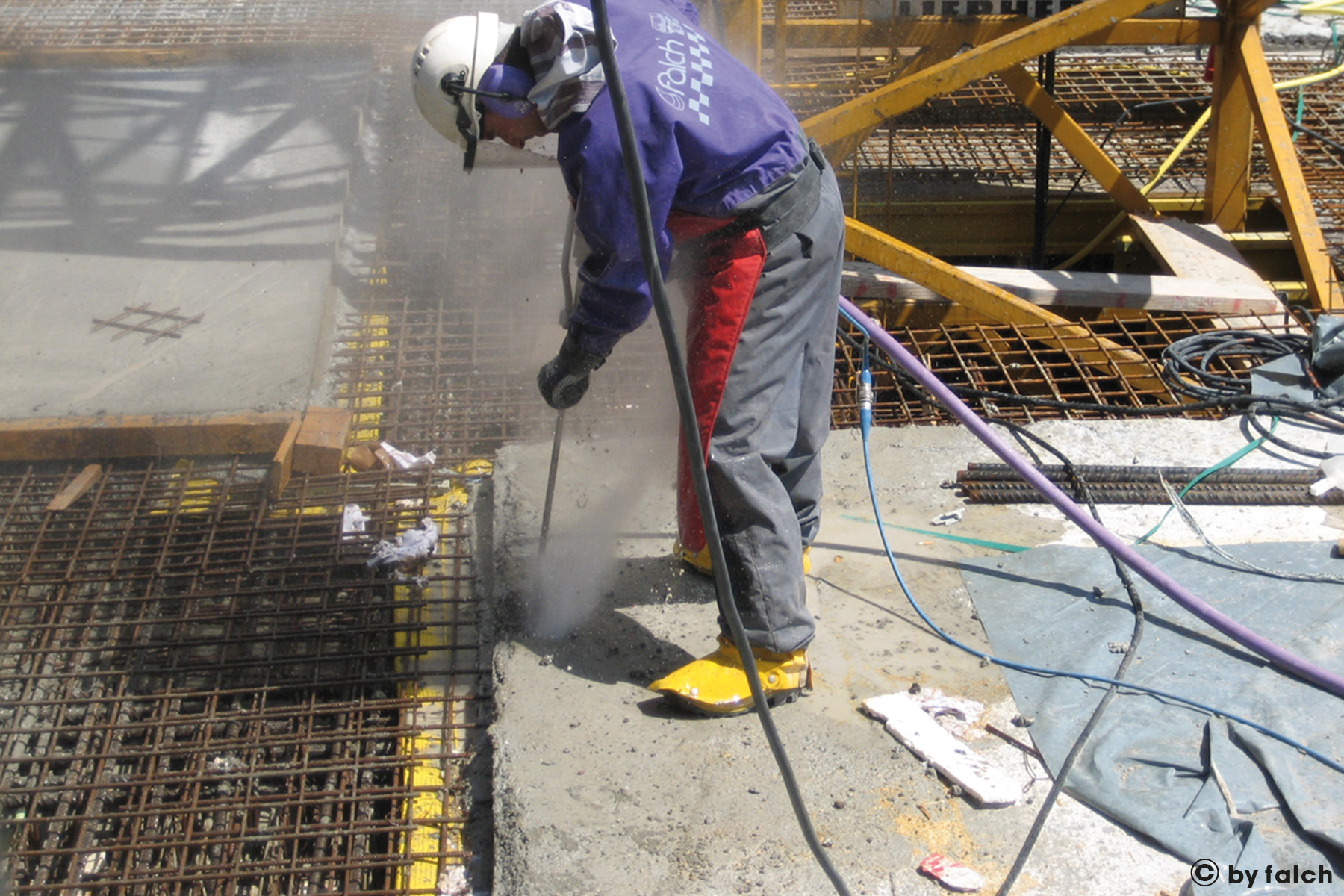


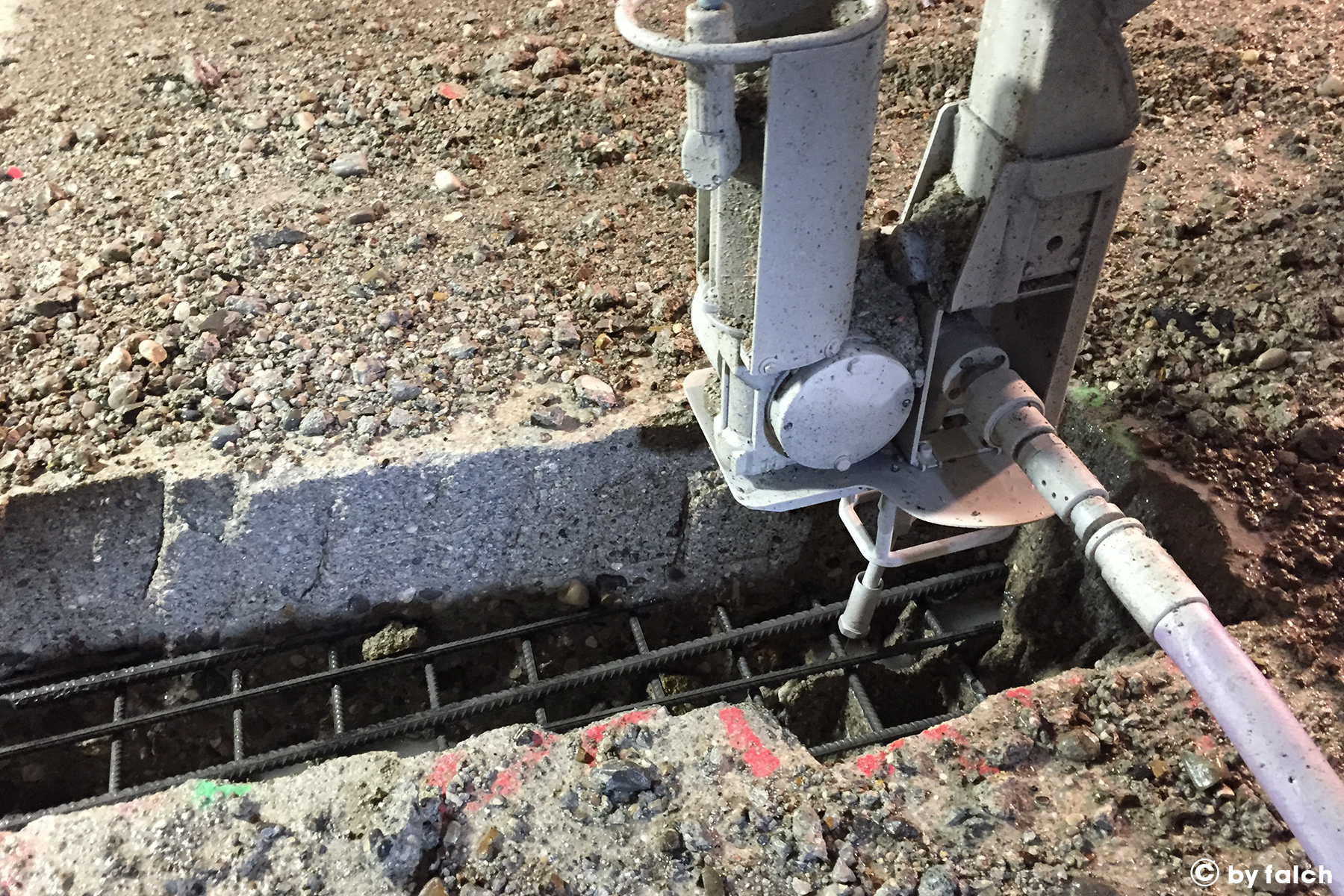


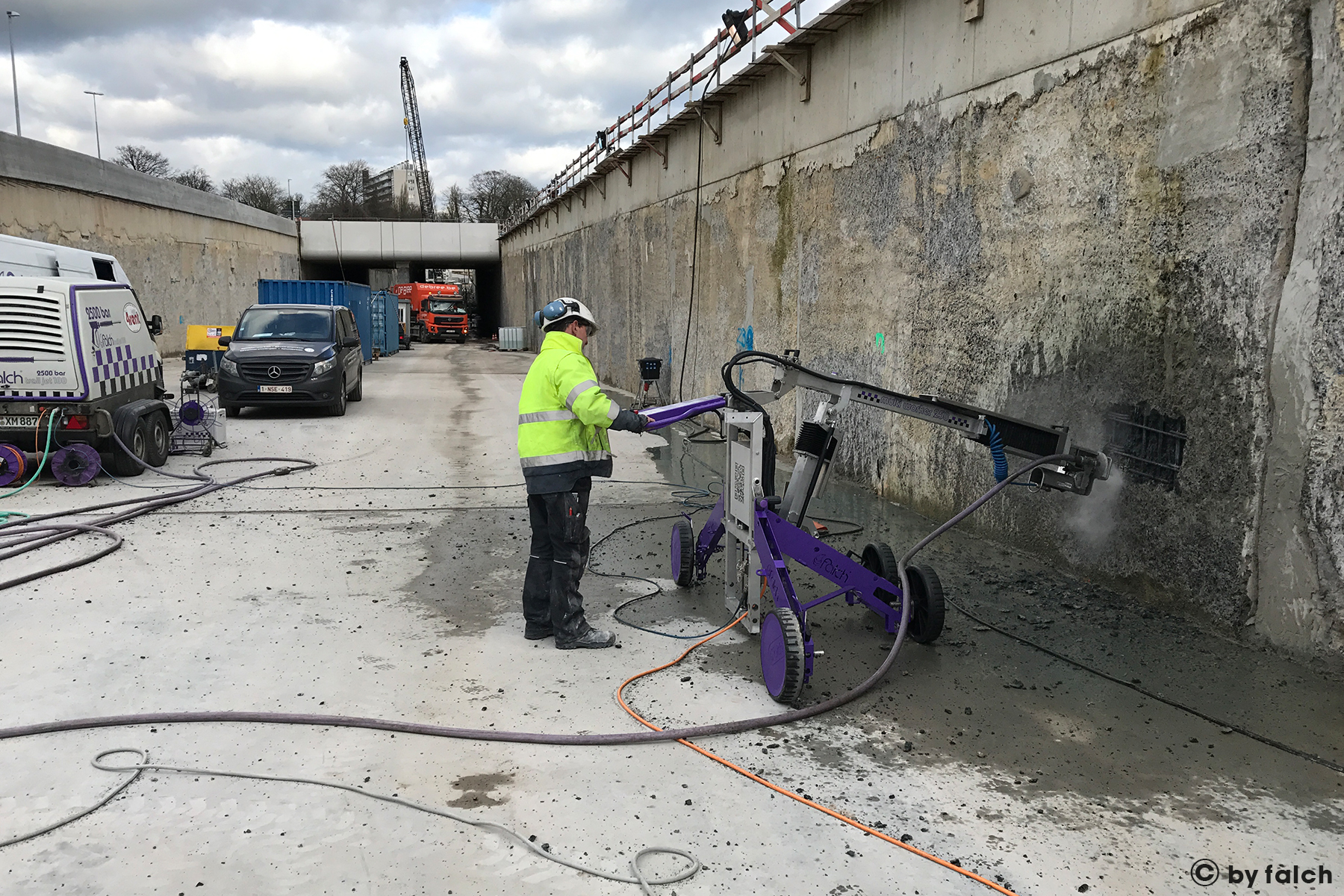


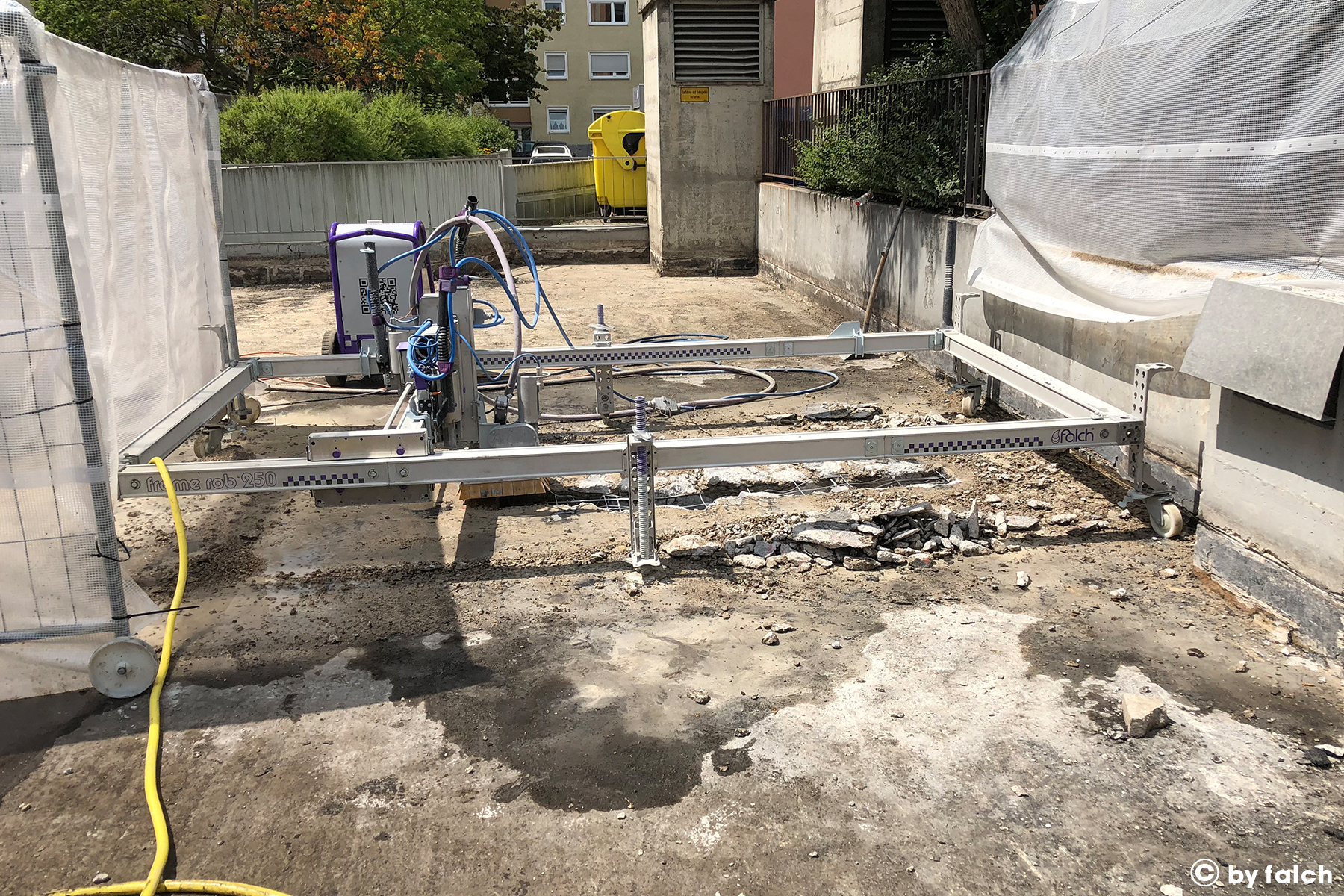


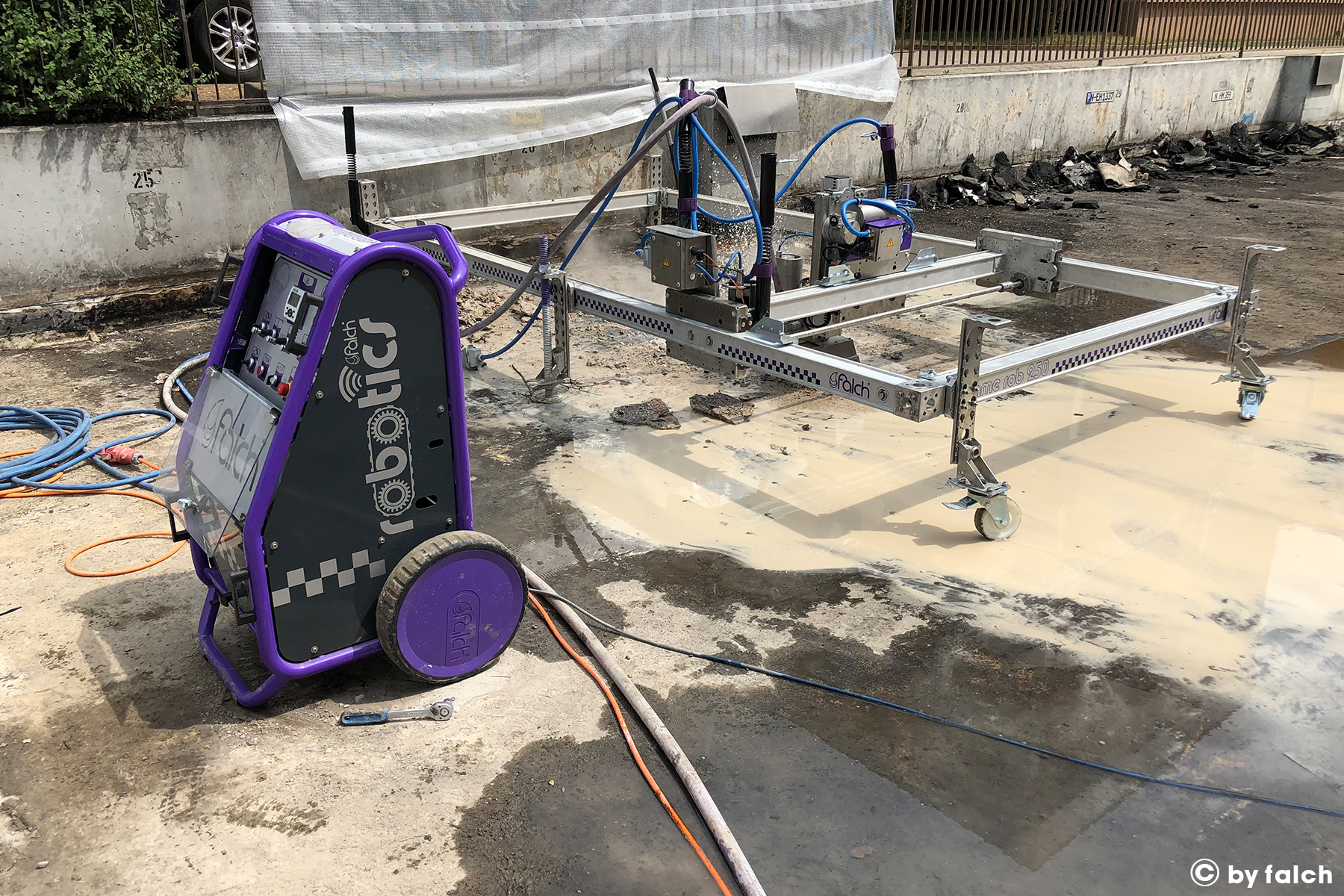


hydrodemolition vs. concrete demolition with a jackhammer
while mechanical tools such as jackhammers remove concrete through impact force, hydrodemolition machines use ultra-high-pressure water jets for controlled and selective removal.
| method | removal depth | precision | reinforcement (rebar & mesh) |
|---|---|---|---|
| high-pressure water jetting | surface to deep, continuously variable | very high | intact |
| jackhammer | localized, deep | low | locally destroyed |
as the comparison shows, hydrodemolition offers major advantages wherever structural integrity, precise removal, and preservation of reinforcement are critical.
key benefits of hydrodemolition
no micro-cracks: structural integrity is preserved | because hydrodemolition works without impact forces or vibrations, it does not create micro-cracks in the remaining concrete. the structural integrity of the substrate remains intact. |
clean, intact rebars: no additional sandblasting required | the water jet removes concrete while leaving reinforcement bars and steel mesh undamaged and free from corrosion residues. additional cleaning processes such as sandblasting are often unnecessary. |
superior bonding surface for new concrete | hydrodemolition creates an ideal surface profile for repair mortar or new concrete. the rough, clean surface significantly improves adhesion and bonding strength. |
reduced dust and vibration | compared to mechanical demolition methods, hydrodemolition generates minimal dust and greatly reduces vibration and noise emissions, improving safety and working conditions. |
selective and non-selective concrete removal in one system | from highly precise spot repair to large-scale surface removal, hydrodemolition systems can be adapted to a wide range of concrete rehabilitation applications. |
areas of application for hydrodemolition equipment
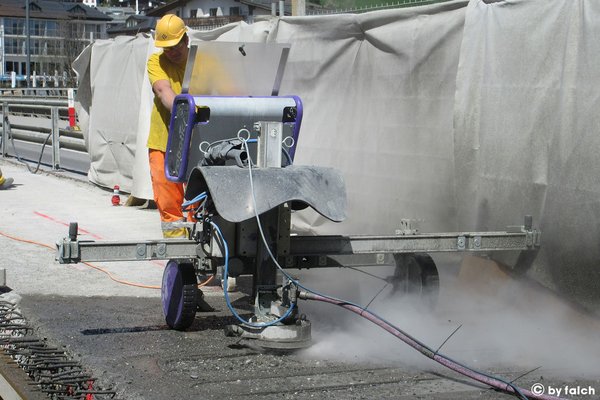
as seen in falch’s project reports, hydrodemolition equipment is used wherever damaged concrete must be removed precisely while preserving the structural integrity of the remaining substrate and reinforcement.
- bridges & road surfaces
- underground car parks / parking decks
- dams, spillways & water infrastructure
- sports stadiums & industrial floors
- tunnels & pipes
- nuclear power plants & water treatment facilities
thanks to its precision, low vibration, and selective removal capabilities, hydrodemolition has become an established solution for demanding concrete repair and surface preparation applications worldwide.
falch hydrodemolition machines & solutions
high-pressure pumps | hydrodemolition robots | manual solutions |
| falch offers powerful UHP pumps and machines in different performance classes for a wide range of hydrodemolition applications. | automated robots enable efficient large-area concrete removal on horizontal, vertical, and overhead surfaces. | portable UHP systems with patented automation tools and other accessories allow precise manual hydrodemolition even in confined areas. |
choosing the right falch equipment for every application
selecting the right Falch equipment depends on the scope and depth of the removal required. for optimal results, key factors such as water pressure, flow rate, and nozzle size must be matched to the application.
superficial removal |
deep removal |
| less water volume but higher pressure results in a better removal pattern | high pump output and large water volume required, "corejet" length is relevant |
| for smaller jobs with the hand lance, the mobile trail jet 125 is the ideal unit. |
large-scale jobs are typically carried out using a more powerful machine, such as the base jet 500. if deep concrete removal is required (20 cm or more) the pump's flow rate becomes all the more critical. here, the "corejet" plays an important role: the "corejet" is the zone in which the water jet has its full energy. the larger the nozzle size and the water volume, the longer the "corejet". |
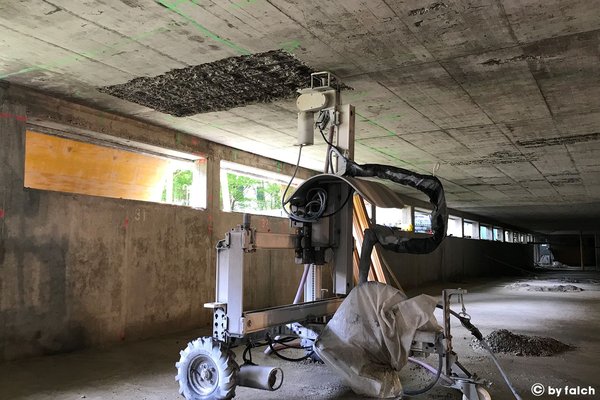
why choose falch for hydrodemolition?
when it comes to hydrodemolition and ultra-high-pressure water jetting, choosing the right technology partner is essential for efficiency, reliability, and long-term project success.
- decades of experience in uhp water jetting technology
- patented automation tools
- full product range: manual to fully automated
- global service network & falch academy
with advanced technology, comprehensive products, and worldwide support, falch provides solutions for efficient, precise, and reliable hydrodemolition operations.
faq on hydrodemolition
what is hydrodemolition?
hydrodemolition is a concrete removal process that uses ultra-high-pressure water jets to selectively remove damaged concrete without harming the remaining structure or reinforcement.
what is the difference between hydrodemolition and other concrete removal methods?
unlike jackhammers or mechanical demolition tools, hydrodemolition works without vibrations or impact forces. it preserves the structural integrity of the concrete and leaves reinforcement bars intact.
what pressure is used in hydrodemolition?
pumps with high pressures of 2,500–3,000 bar (36,250–43,500 psi) are ideal for breaking concrete surfaces. the better the concrete quality, the more pressure is required.
can hydrodemolition be used on reinforced concrete?
yes. hydrodemolition is particularly suitable for reinforced concrete because it removes concrete while leaving rebars and reinforcement mesh undamaged.
what is a hydrodemolition robot?
a hydrodemolition robot is an automated machine equipped with ultra-high-pressure water jet tools for controlled and efficient concrete removal on large horizontal, vertical, or overhead surfaces.