


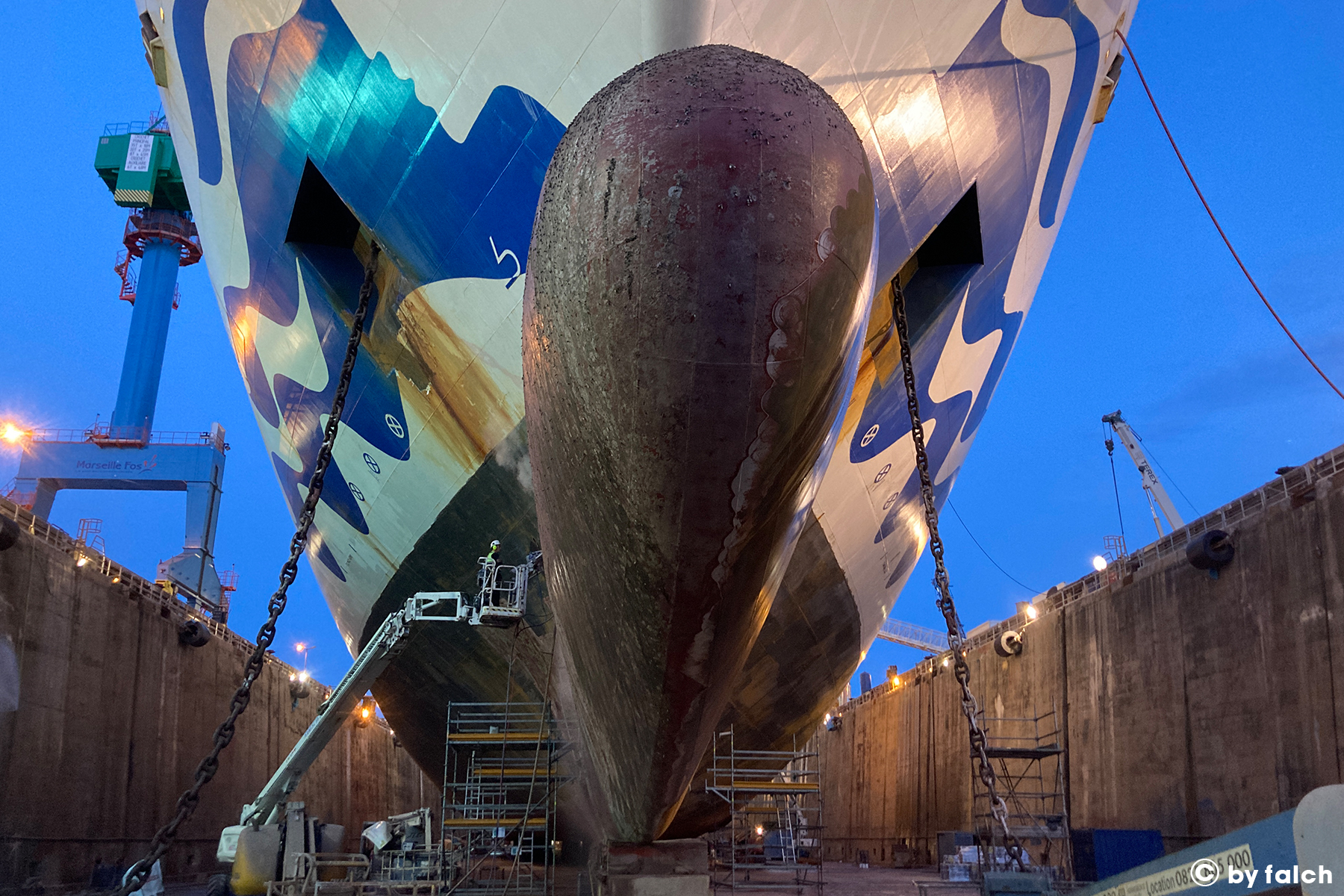
ship renovation brings a vessel's surfaces back to a clean condition, removing old coatings, marine growth, and corrosion so a fresh protective system can be applied. with ultra high pressure (uhp) water jetting, this covers full ship renovation, targeted hull blasting, and complete hull treatment, all without abrasives.
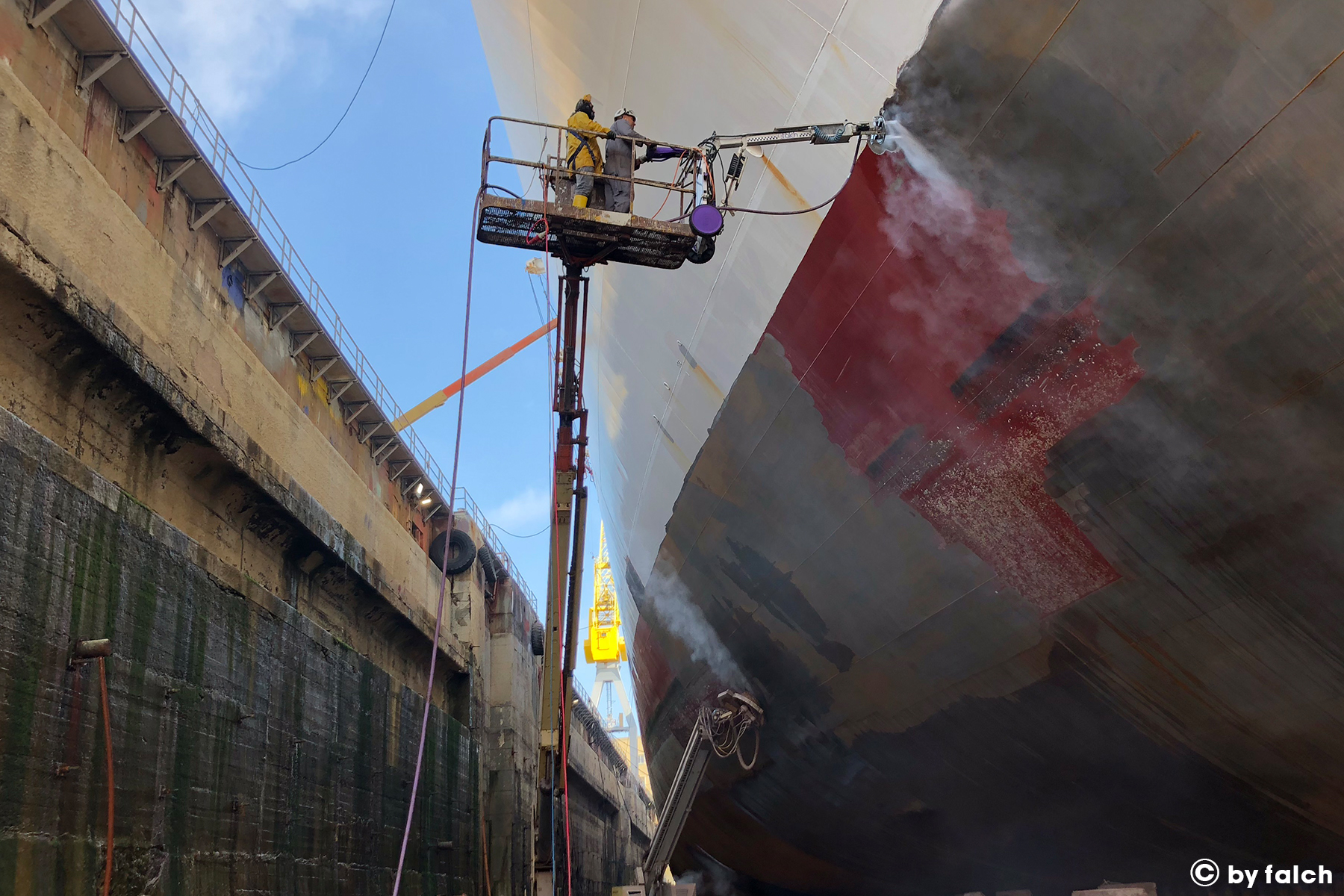
falch technology replaces traditional sandblasting with clear benefits: less personnel and far lower disposal costs, since there's no spent grit to handle as contaminated waste. and the performance speaks for itself: uhp removes up to 7 old coating layers in a single pass, taking the hull down to bare substrate quickly and cleanly.
nykyään falch on välttämätön partneri laivojen ulkopintojen puhdistuksessa. laivojen pintojen puhdistus, pinnoitteen ja ruosteenpoisto ovat osa ultrakorkeapainepesureidemme vakiotehtäviä. joskus jopa 10 kerrosta vanhaa pinnoitetta on poistettava yhdellä kertaa. Erityisesti näissä töissä edut olemassa olevaan hiekkapuhallukseen verrattuna ovat tuntuvat. Vesisuihkuteknologiamme pienentyneet henkilöstö-, oheis- ja hävityskustannukset saavat yhä useammat telakat ja varustamot siirtymään käyttämään teknologiaamme. yhteistyö johtavien päällystysmateriaalien valmistajien kanssa on kannattanut erikoispinnoitusjärjestelmien kehittämisen ansiosta.

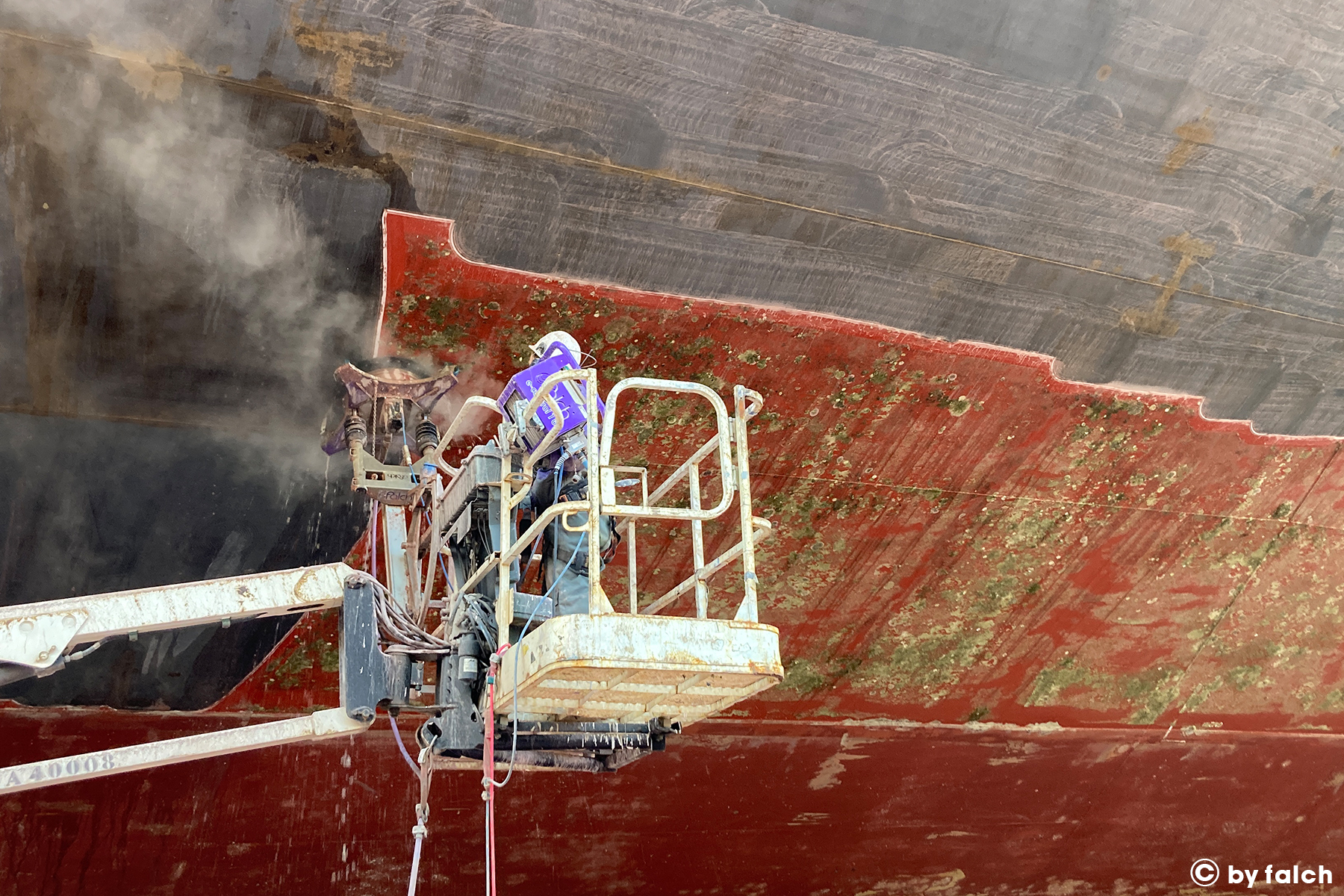

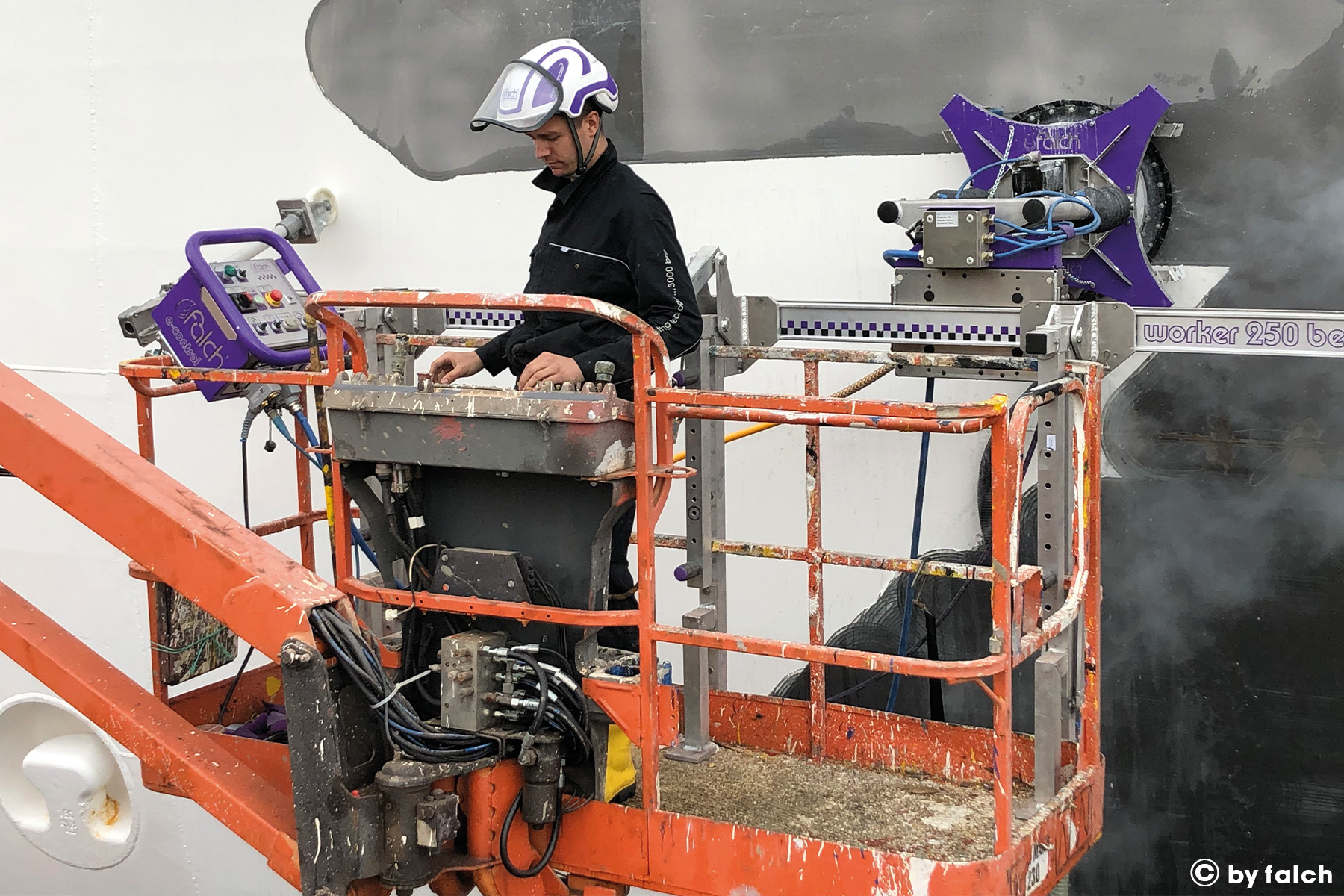


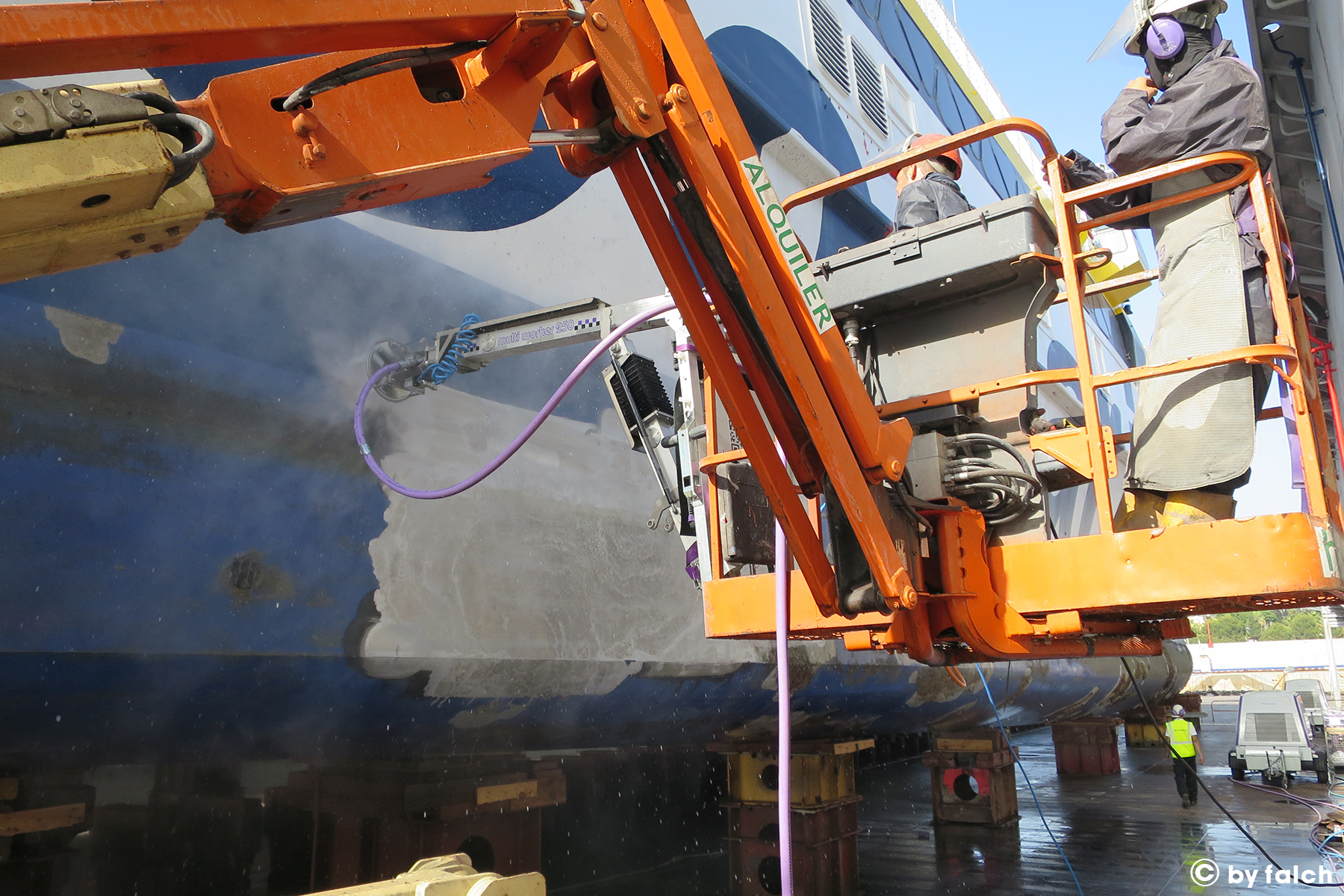


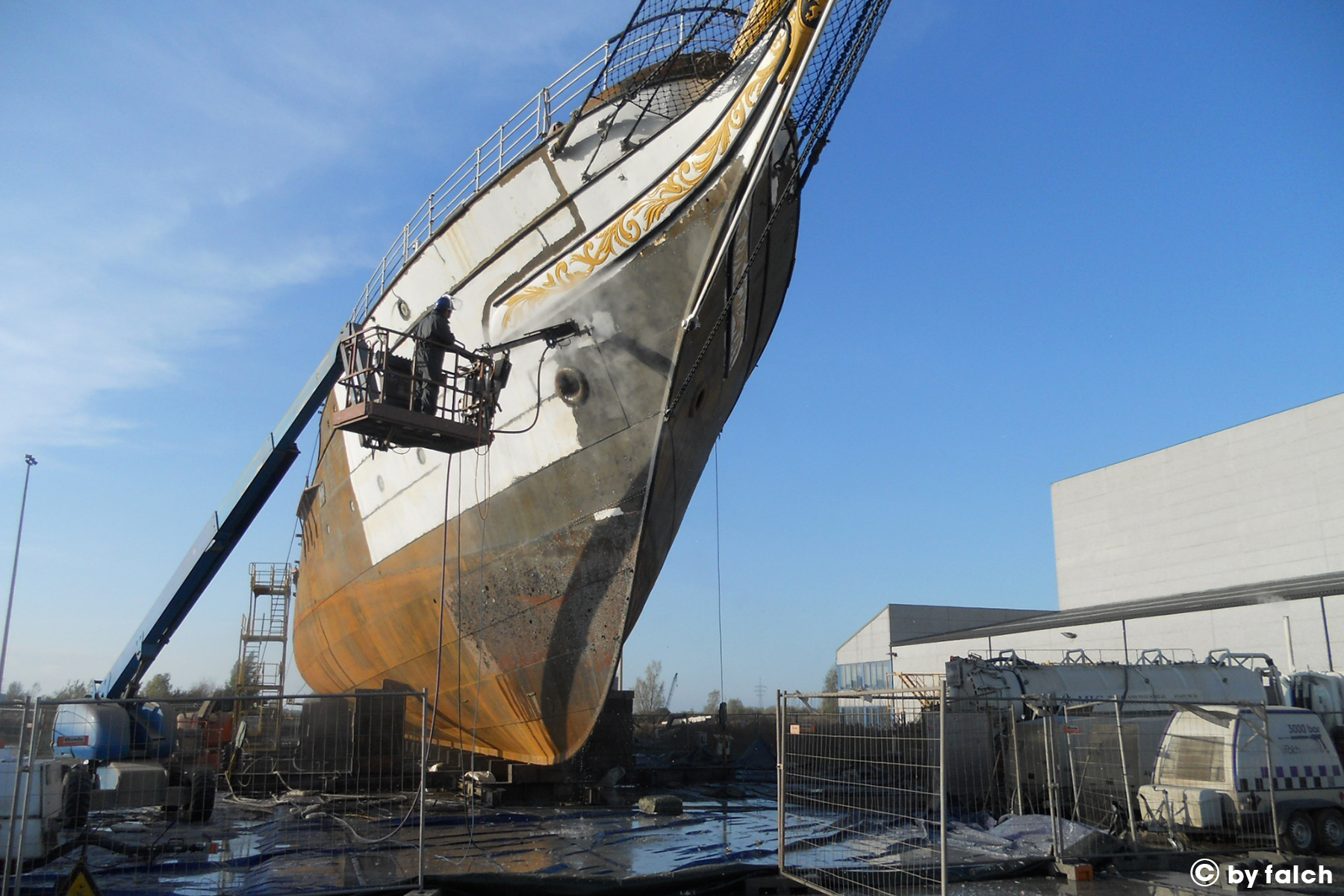

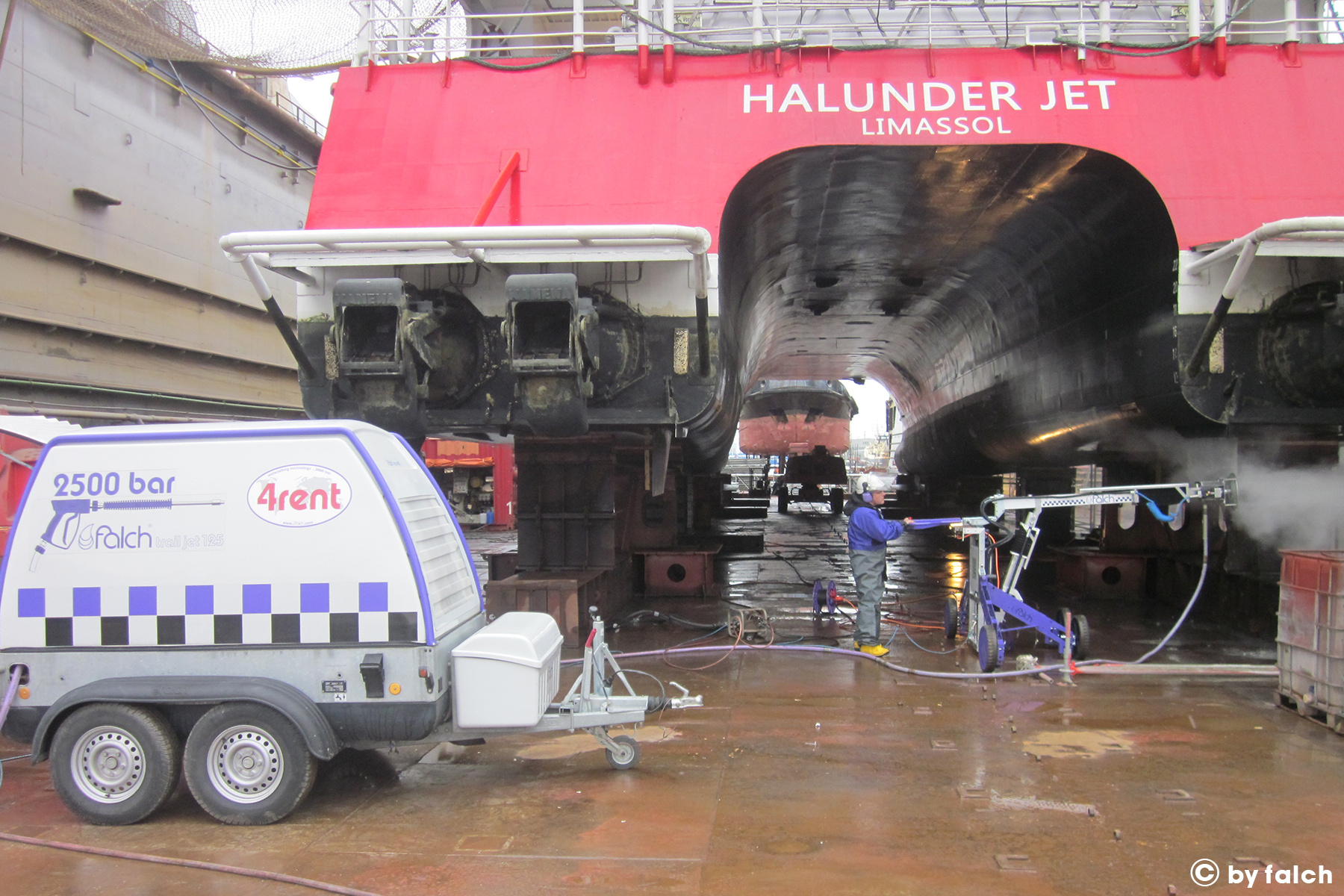
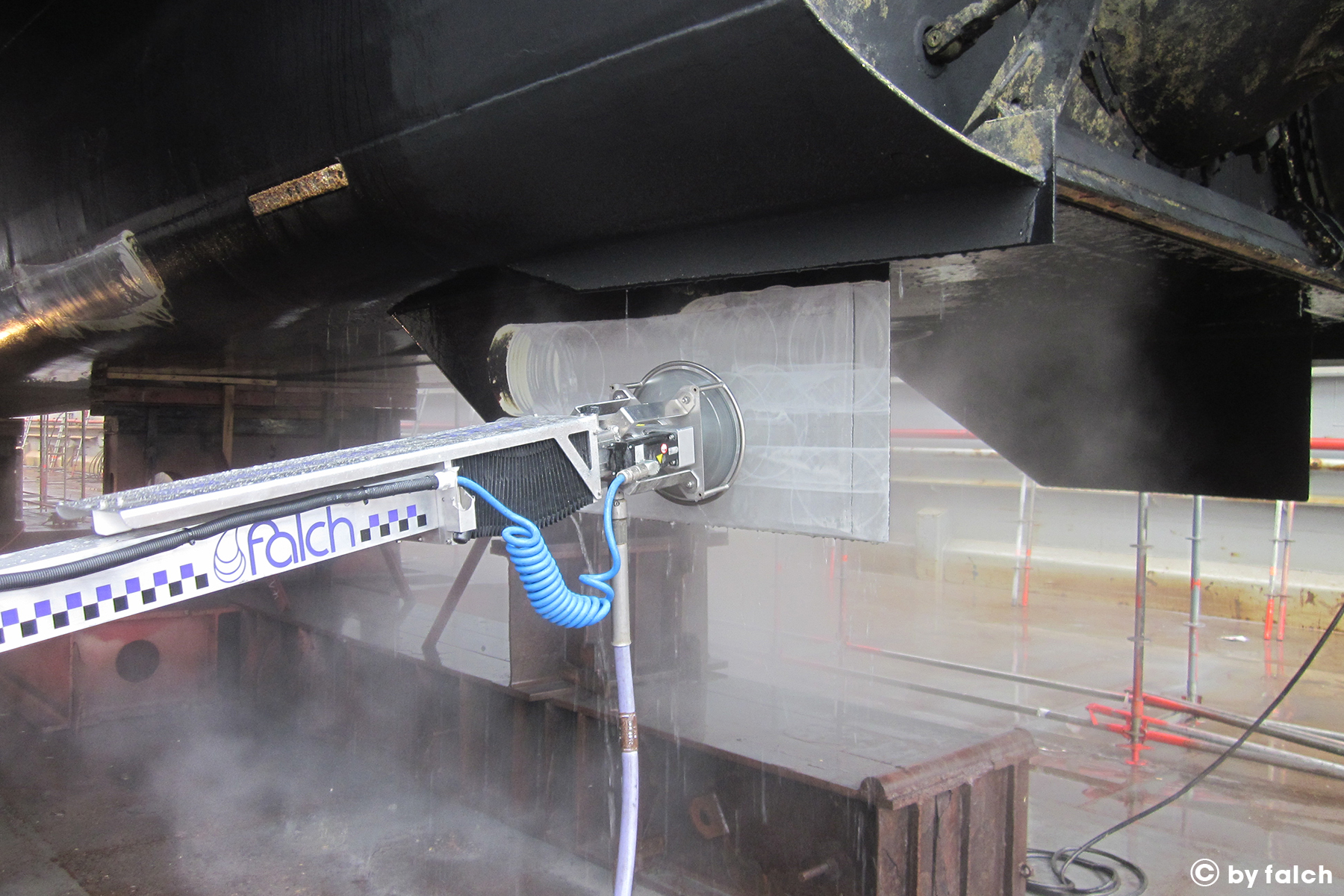
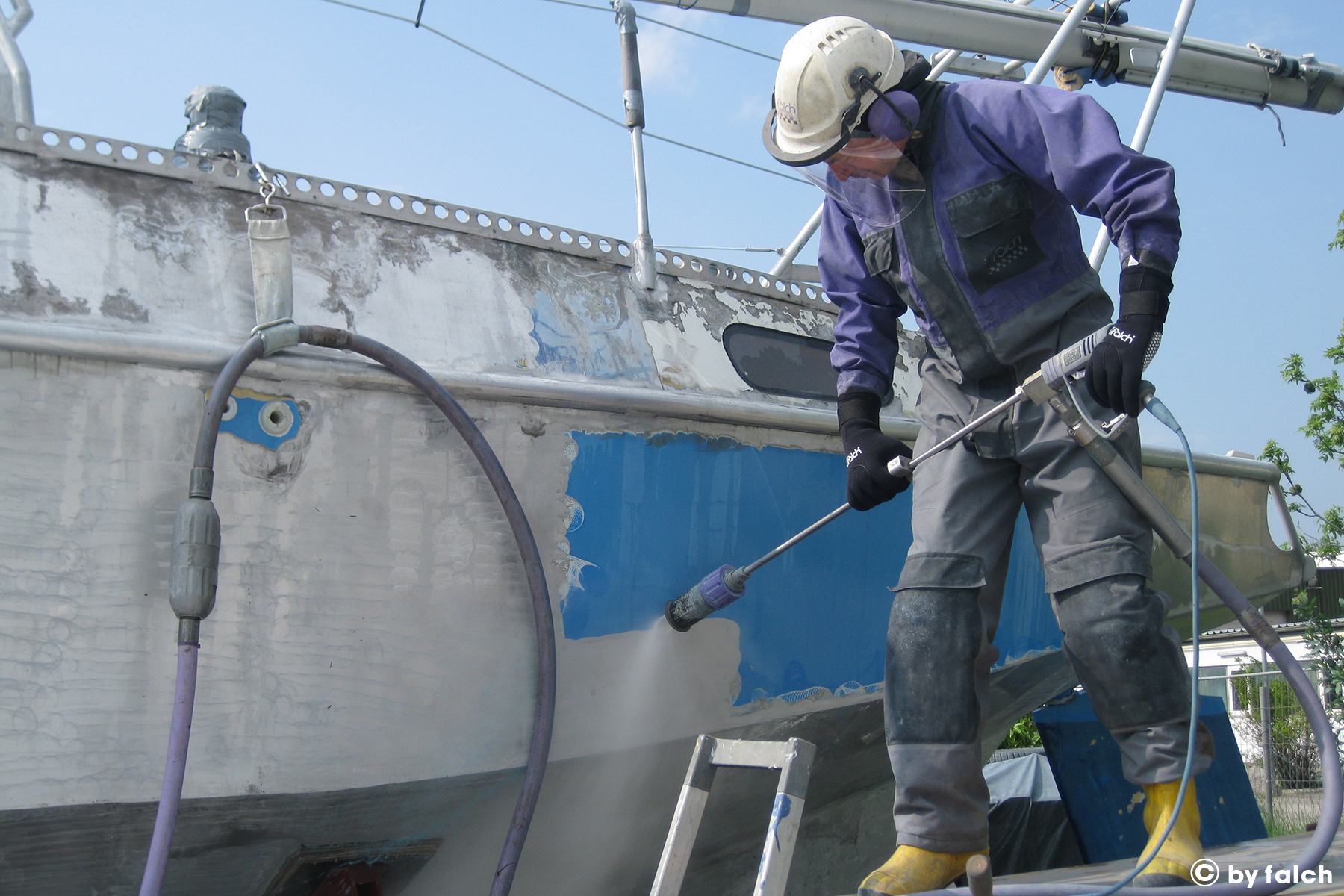


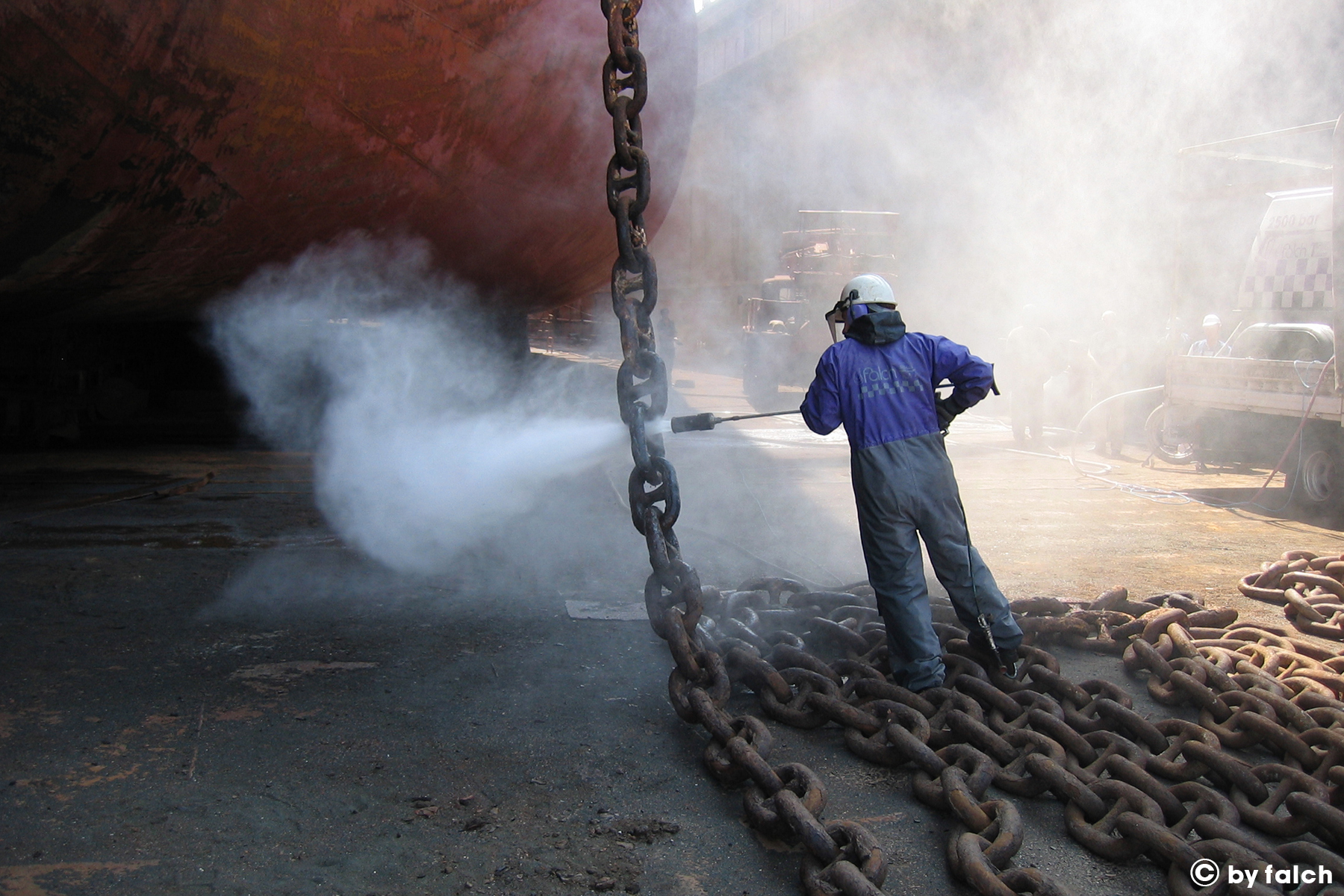


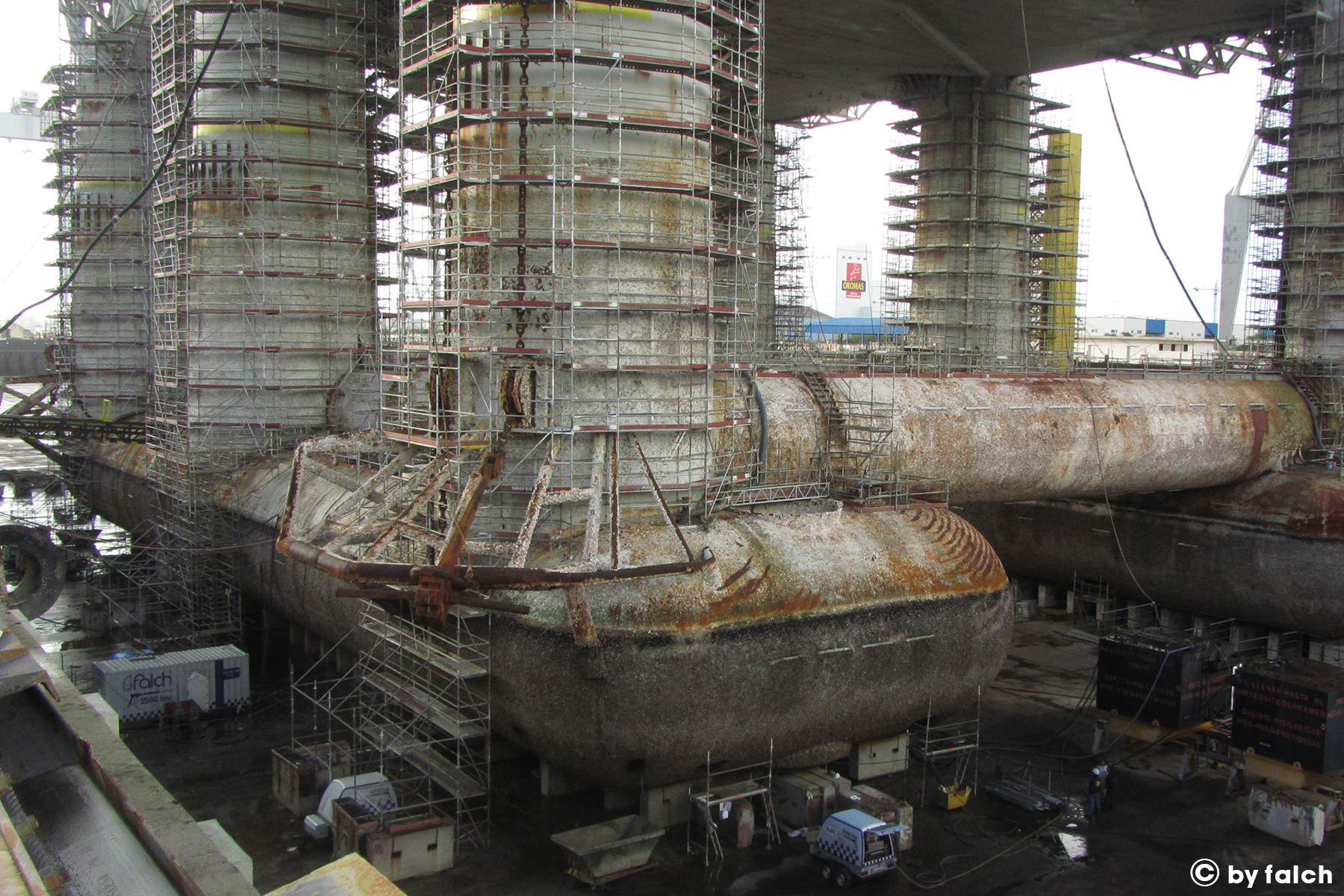


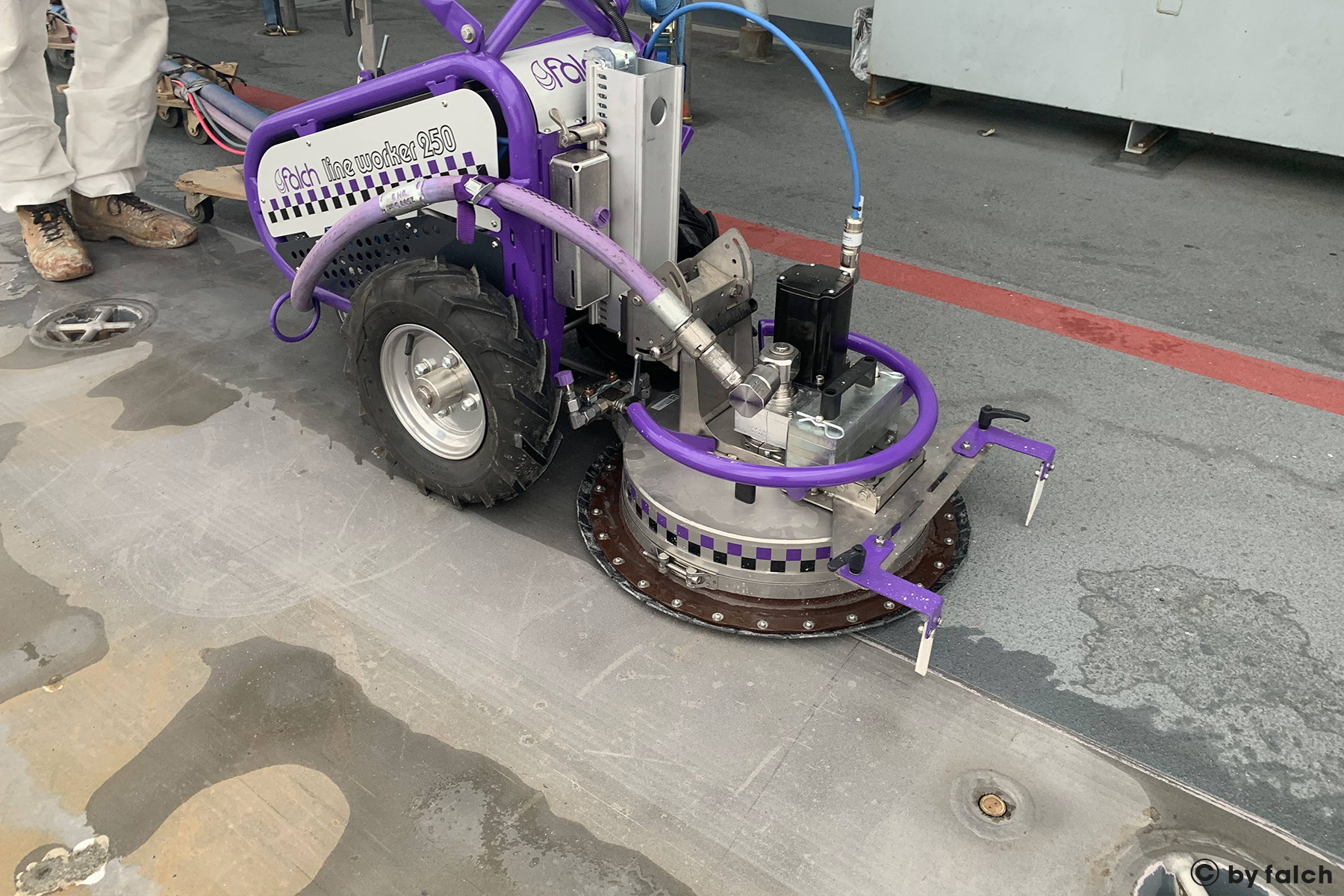


automated hull blasting and flat bottom blasting: the falch robot approach
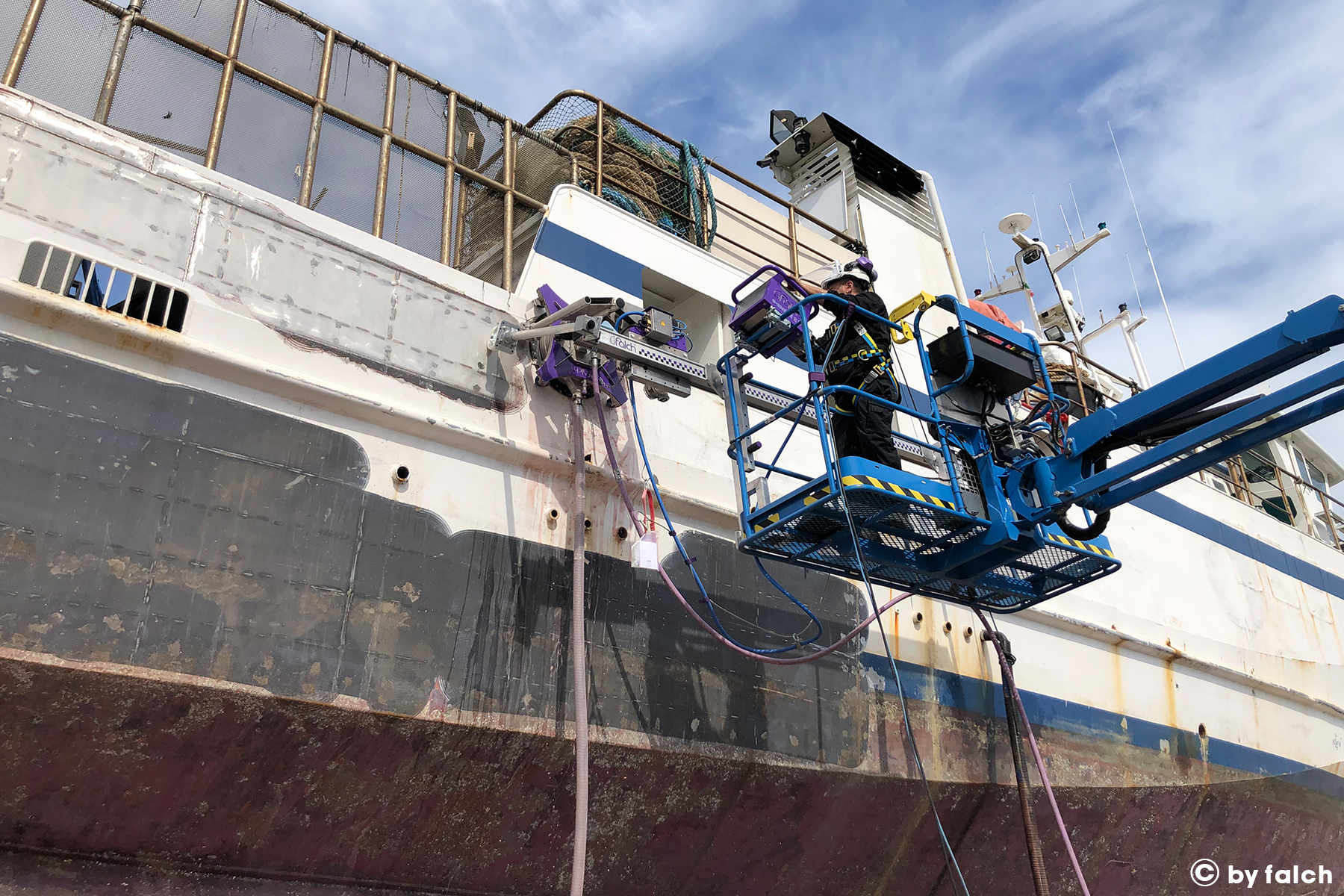
automation is what sets falch apart in large-scale hull treatment. our magnetic water jetting robots attach directly to the steel hull and move autonomously across the surface, making automated hull blasting and flat bottom blasting faster and more reliable than any manual method. our robots offer consistent surface coverage, greater operator safety, and a major gain in speed.
| system | flat surface (m²/h) | curved surface (m²/h) | per 8-hour shift (m²) | per 16-hour day (m²) |
|---|---|---|---|---|
| surface rob (250 kw) |
60 | 40 | 520 | 1,040 |
| handlance (125 kw) |
4 | 3 | 32 | 64 |
the figures make the case for automated hull treatment: more than fifteen times the daily output of manual work, with steadier quality and a safer working environment.
ship refurbishment: the full process
a complete ship refurbishment with uhp water jetting moves through several stages of hull treatment, from stripping the old surface to applying fresh protection:
1. coating removal |
old paint, antifouling, and worn protective layers are stripped from the hull, layer by layer |
2. rust removal |
corrosion and scale are blasted away down to bare, sound steel |
3. surface prep |
the cleaned hull is brought to a defined standard (typically wa 2½ / sa 2½) |
4. new coating application |
a fresh primer and protective coating system is applied |
together, these steps ensure thorough ship rust removal and a properly prepared hull, ready for a long-lasting new coating system.
corrosion removal: marine sand & grit blasting
marine sand blasting and marine grit blasting are traditional methods of abrasive surface preparation, used mainly when corrosion has to be removed or a surface readied for a new coating. the two differ in the media they use and the jobs they suit:
| method | abrasive | typical use |
|---|---|---|
| marine sand blasting | lighter media | general surface preparation |
| marine grit blasting | harder abrasives | heavy rust and structural areas |
the result is usually measured against the sa cleanliness standards, which define how thoroughly rust and old coating have been removed:
- sa 2: thorough blast cleaning
- sa 2.5: very thorough blast cleaning
- sa 3: blast cleaning to visually clean steel
abrasive blasting does come with drawbacks. it generates large amounts of dust and debris, so containment measures such as wet or vacuum blasting are needed to keep the surrounding environment clean. for this reason it is increasingly seen as the less favorable option compared with ultra high pressure water jetting, which removes corrosion and coatings without abrasives, produces no dust, and is easier to contain and dispose of.
where blasting is still used, it remains a proven route for corrosion removal and surface preparation, but for most modern marine renovation work, uhp water jetting is the cleaner, more efficient choice.
heli-washing and heli-jetting: full-surface treatment instead of spot blasting
most ship renovation work is about repairing damaged areas, not stripping the whole hull. the question is how those areas are found and treated. falch covers this in two steps:
- heli-washing cleans the surface only, at pressures up to 500 bar, removing dirt, salts, and loose marine growth without touching the intact coating
- heli-jetting works at higher pressure and removes poorly adhering paint, taking off everything that no longer bonds soundly to the substrate
the real advantage over conventional spot blasting is coverage. spot blasting treats only the visually obvious damage, while heli-jetting sweeps the entire ship side in one consistent pass.
this matters because corrosion often continues underneath paint that still looks intact: the visible spot gets repaired, but the area 30 cm away (which should have been blasted too) or hidden blisters are left untouched and keep rusting. by jetting the whole surface, heli-jetting exposes the many small paint chips and weak spots that spot blasting would simply miss, so the new coating system sits on a sound surface across the full area rather than only where damage happened to be seen.
falch equipment for ship renovation: machines and robots
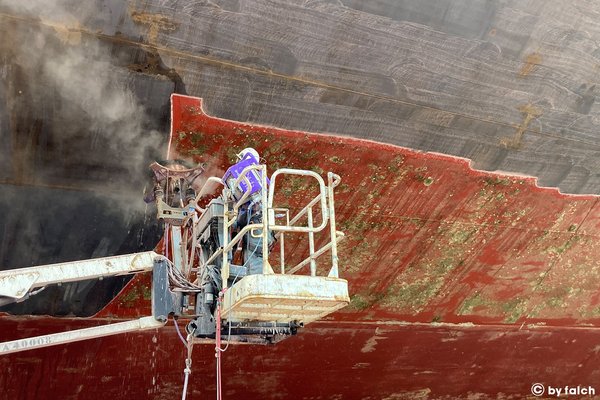
falch offers the right equipment for every ship renovation job:
- manually operated high-pressure machines: for detail work and tight spots
- fully automated robots: they treat large hull areas efficiently while keeping operators clear of the jet
the right choice depends on the surface area, the access conditions on the vessel, and the required pressure level. the full range is also available through our rental machines.
ultra high pressure machines for hull blasting and coating removal

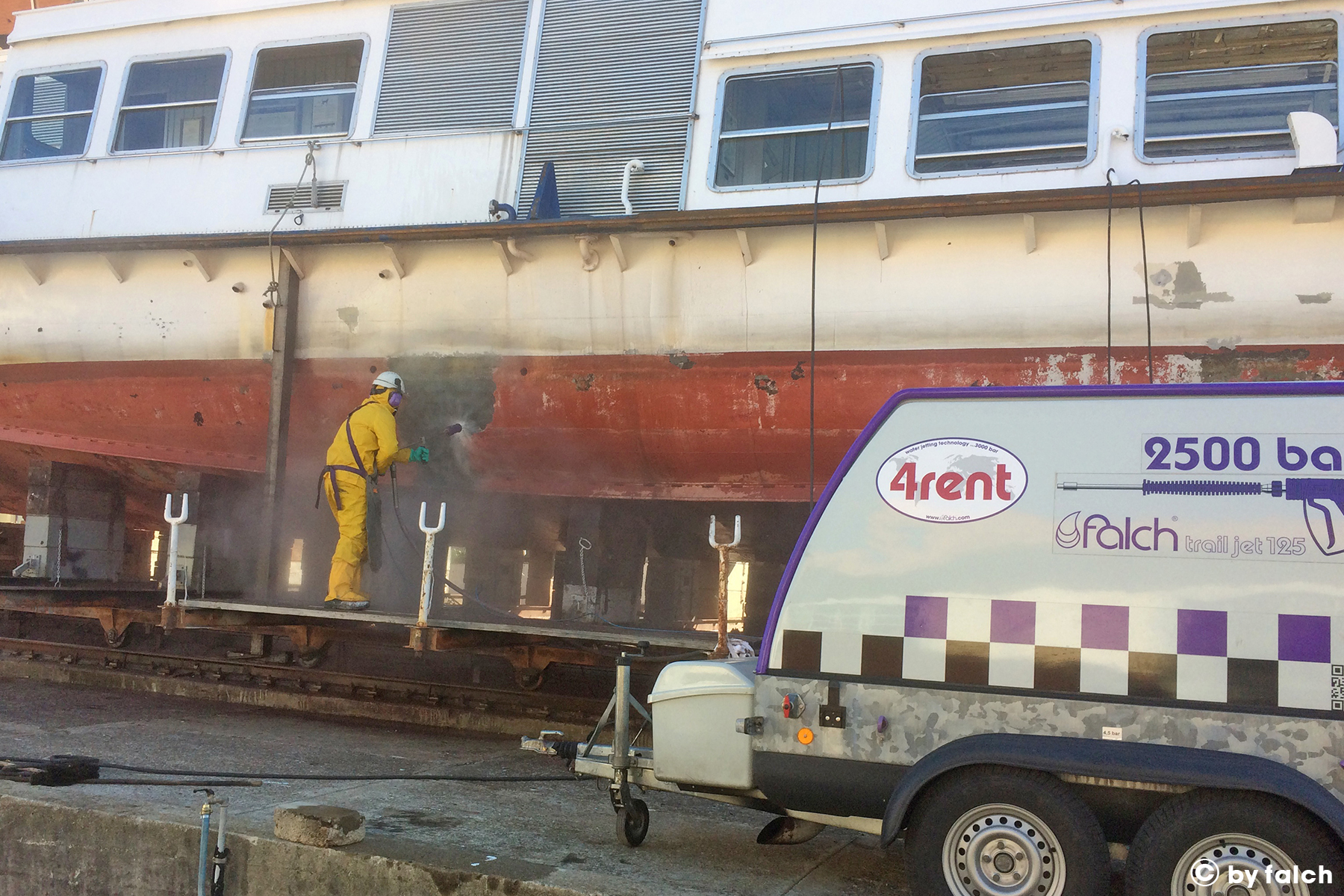
the base jet 250, available in electric or diesel versions, is the workhorse for manual hull blasting and marine paint removal.
with 250 kw of power output and a high operating pressure range, it handles demanding jobs while staying easy to deploy around the yard. it can be moved by forklift or installed in containers for transport and on-site use.
typical applications include
- hull coating removal
- ship rust removal
- antifouling removal
on vertical hull surfaces.
what sets uhp machines apart from conventional pressure washers is the pressure level itself: it allows selective, layer-by-layer removal of coatings and corrosion without damaging the steel substrate underneath—a level of precision that ordinary washers cannot match.
automated robots for large-scale hull treatment
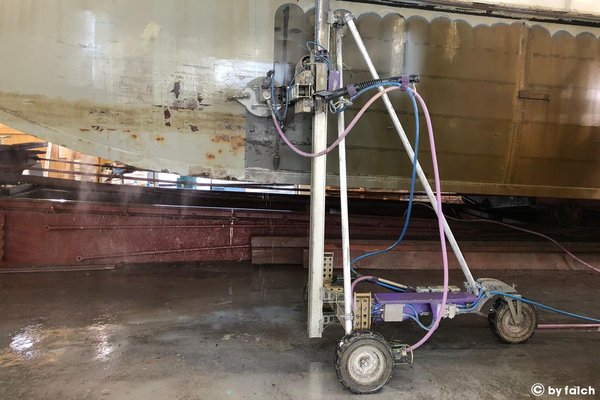
for large vessels, falch offers the surface rob 250, a robotic solution purpose-built for automated hull treatment.
working on a magnetic adhesion principle, the robot attaches securely to the steel hull and moves autonomously across the surface, covering large areas without scaffolding or rope access.
compared to manual work, this automated hull blasting delivers consistent surface prep quality, removes the operator from the ultra high pressure jet, and speeds up turnaround on large vessels. explore the full range on our robots page.
why choose falch for ship renovation?

when it comes to renovating a vessel, falch offers quality, efficiency, and long-term results:
- decades of experience in ultra high pressure water jetting technology
- patented solutions for hull blasting and automated hull treatment
- a product range spanning manually guided machines to fully automated robotic systems
- marine experts to guide you from conventional methods into state-of-the-art ship renovation
- the option to rely on us to supervise the blasting work
falch is a reliable single partner for every stage of your ship renovation project.
faq on ship renovation
what is ship renovation in the context of water jetting?
ship renovation refers to restoring a vessel's outer surfaces so they're ready for a new protective finish. older coatings, accumulated marine growth, and rust are taken off until the hull reaches a sound, well-defined state. when ultra high pressure (uhp) water jetting handles this job, no abrasive material is involved. the force of the water alone lifts the surface away gradually, which makes it suitable for everything from broad hull work to focused blasting and pre-coating preparation.
how does ultra high pressure hull blasting differ from abrasive blasting?
what separates the two methods is essentially what does the cutting. a sandblasting setup throws abrasive particles at the surface (roughly 50 kg of grit for every square meter treated) and all of that spent material later has to be gathered up and discarded as hazardous waste. uhp blasting skips the grit entirely and works with pressurized water, so nothing accumulates on the ground and the steel is not worn down by repeated impact. the practical payoff is a tidier worksite, a smaller crew, reduced waste-handling expenses, and noticeably quicker progress, all while the underlying metal stays intact.
how much surface can water jetting clean per hour?
falch uhp robotics reach 40–60 m²/h, compared to just 3–8 m²/h for both manual uhp handlance work and conventional grit blasting (average numbers from real projects).
can falch robots perform automated hull treatment on flat bottoms?
yes, they can. the falch surface rob was designed precisely for flat-bottom work and unattended hull processing. it travels the surface on its own, achieving even results at speeds reaching 65 m²/h on flat sections. because the machine does the traveling, crew members stay safely back from the jet. for very hard coating, falch offers the line worker. it includes adjustable weights for smooth running and a rotatable wheel for easy turning.
how many coating layers can be removed in one pass during ship refurbishment?
typically 5–7 layers can be removed cleanly in a single pass with ultra high pressure water jetting at 2,500–3,000 bar. a ship's hull never carries just one coat: over its service life it's built up to more than 5 layers, since between full strips the hull is usually spot-blasted once or twice to repair damaged areas, and each repair requires at least a full antifouling recoat afterward. by the time a vessel is taken down to bare substrate, all of these layers come off together right down to the steel.